

The Bible, The Quran, and Science: Exploring Ancient Texts Through Modern Eyes
Disclaimer
This article on The Bible, The Quran and Science is written for educational purposes only. It presents comparisons between religious texts and scientific knowledge in simple language. It does not promote any religion, claim one book is better than another, or criticize faith. Interpretations of holy books can differ among scholars and believers. Readers should study original texts and consult experts for deeper understanding. All views here aim to inform, not to judge.
The Bible, The Quran and Science has fascinated people for decades. Many wonder if ancient holy books match what scientists discover today. A famous book by French doctor Maurice Bucaille explores exactly this. In The Bible, The Quran and Science, he compares the Old Testament, the Gospels, and the Quran with modern facts from astronomy, biology, and more.
The Bible, The Quran and Science shows both harmony and differences. Some parts of the Bible describe creation in ways that seem to clash with current knowledge. The Quran, on the other hand, uses descriptions that many see as close to scientific findings. Yet science keeps changing, and faith offers meaning beyond numbers and experiments.
In this long guide, we will walk through key topics in easy English. We will look at creation stories, stars and space, how babies grow, mountains, and more. You will see quotes from the texts and simple explanations of science. By the end, you will understand why The Bible, The Quran and Science matters to millions today.

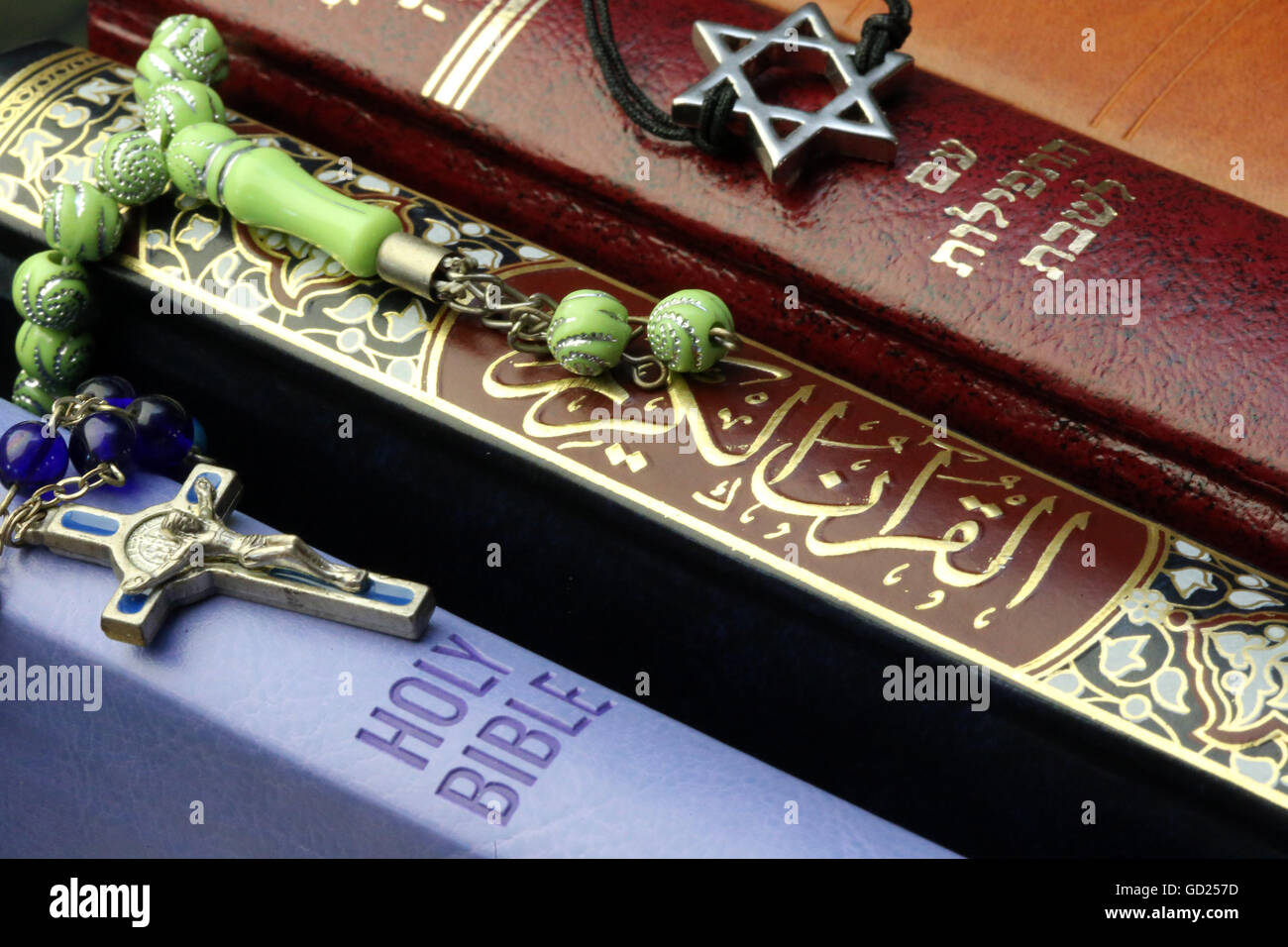
The Historical Background of The Bible, The Quran and Science
Long ago, people looked at the sky and earth and asked big questions. Who made the stars? How did life begin? The Bible was written over many centuries, starting around 1400 BCE for some parts. The Quran came in the 7th century CE to Prophet Muhammad.
The Bible, The Quran and Science as a topic grew popular in the 1970s after Bucaille’s work. He was a surgeon who treated Muslim leaders and studied Arabic. He wanted to check if holy books agreed with facts he saw in hospitals and labs.
Before modern science, people thought the earth was flat or the sun moved around it. The Bible has verses like Isaiah 40:22 that speak of the “circle of the earth.” Many say this hints at a round planet. The Quran talks about the sky as a “protected ceiling” (21:32), which some link to the atmosphere that shields us from harmful rays.
Science grew fast after Galileo and Newton. Today we know the universe is billions of years old. In The Bible, The Quran and Science, experts note that religious texts use simple language for people of their time. They were not science textbooks. Yet many believers say God gave hints that only later science would fully explain.
This history helps us see why comparing The Bible, The Quran and Science feels fresh even now. New discoveries in space or medicine make us reread old words with new eyes.
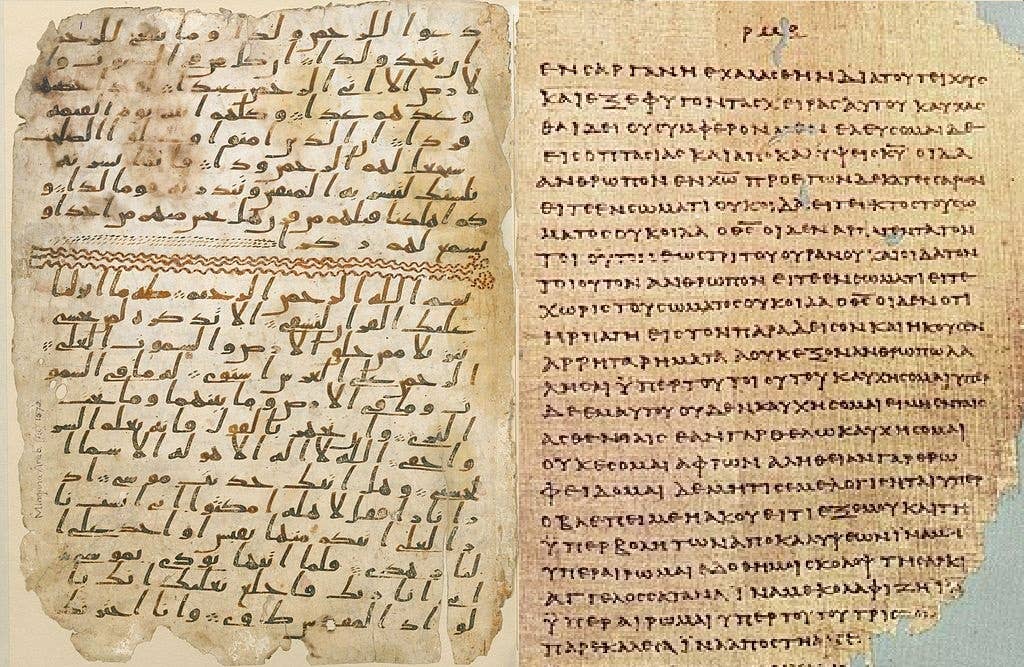
Ancient pages from the Quran and Bible remind us how carefully these texts were copied and preserved.
The Creation Story in The Bible, The Quran and Science
Creation is the first big topic in The Bible, The Quran and Science. The Bible opens with Genesis: “In the beginning God created the heavens and the earth.” It says six days of work – light on day one, sky on day two, land and plants on day three, sun and moon on day four, animals on day five, and humans on day six. Many Christians read this as poetry or symbolic periods, not 24-hour days. Others take it literally and say the earth is young, about 6,000 years old.
Science tells a different timeline. The Big Bang happened 13.8 billion years ago. The earth formed 4.5 billion years ago. Life started in oceans billions of years later. Plants came before animals. Humans arrived very recently in earth’s long story.
The Quran describes creation differently. It says God made the heavens and earth in six periods (not days). One verse (41:9-12) says the earth was made first, then mountains, then the sky was turned into seven heavens. Another verse (21:30) says: “Have those who disbelieved not considered that the heavens and the earth were a joined entity, and We separated them?” Many see this as the Big Bang – everything was together, then it expanded.
In The Bible, The Quran and Science, Bucaille points out that the Quran’s order matches some scientific ideas better than the Bible’s. The Quran says everything started from smoke or gas (41:11), like the early hot universe. It also says God “turned to the heaven when it was smoke.” Scientists today confirm the early universe was a hot, dense cloud.
Yet both books agree on one key point: God is the Creator. Science explains “how” but not “why.” Faith gives the “why.” This balance makes The Bible, The Quran and Science a peaceful discussion for many believers.
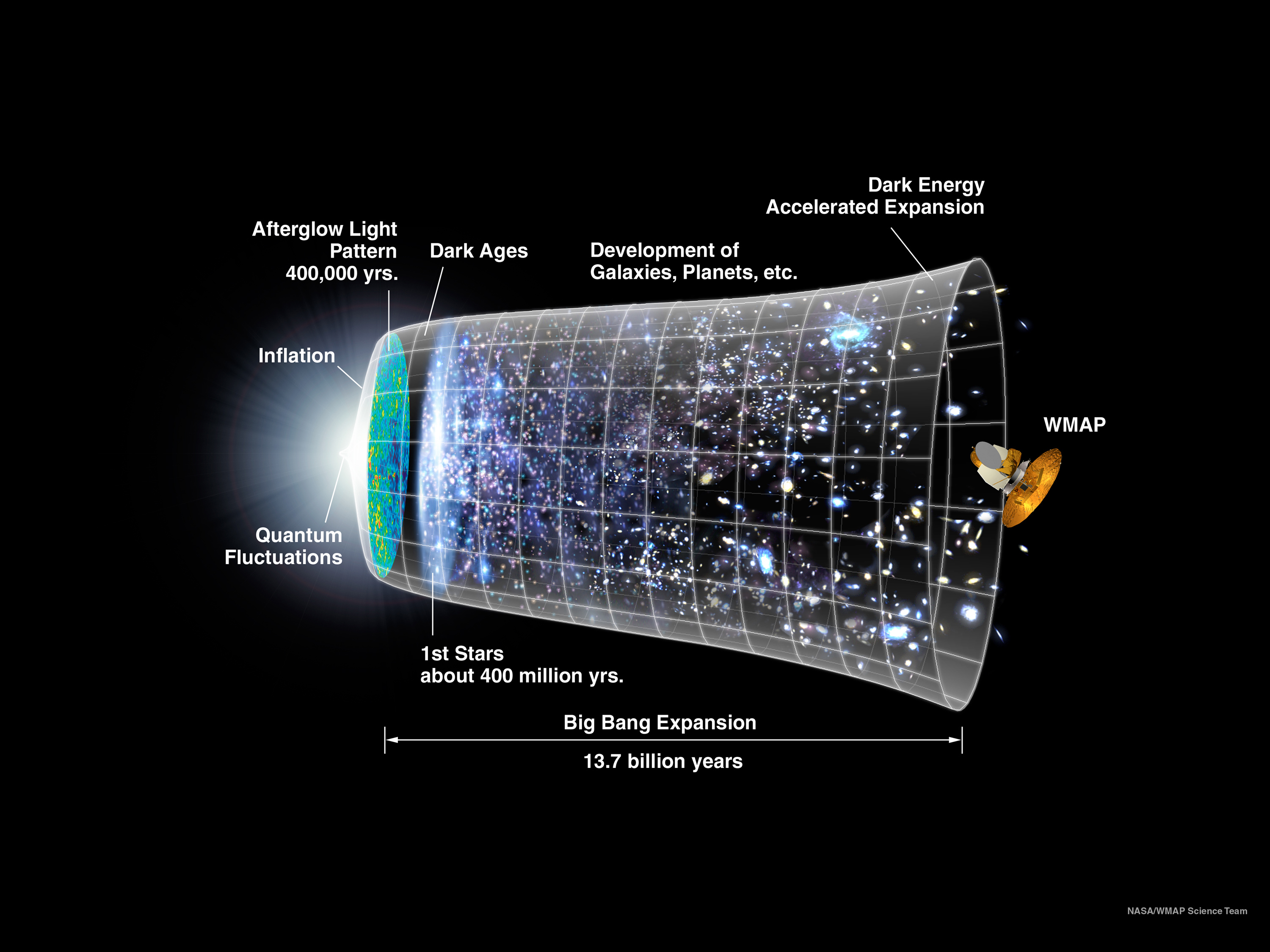
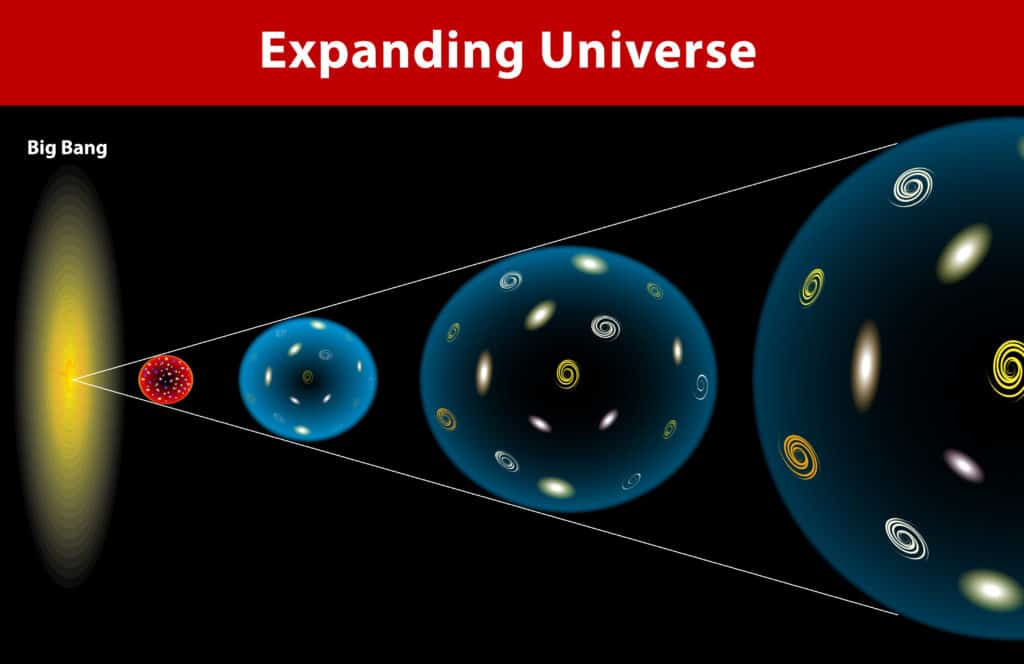
These pictures show the Big Bang and how the universe keeps growing – ideas that many link to verses in The Bible, The Quran and Science.
Astronomy and the Cosmos in The Bible, The Quran and Science
Space is full of wonders, and The Bible, The Quran and Science talks a lot about stars and sky. The Bible says God made the sun, moon, and stars for signs and seasons (Genesis 1:14). Psalm 19 says the heavens declare God’s glory.
The Quran goes further. It says the universe is expanding: “And We have built the heaven with might and We continue to expand it” (51:47). Scientists discovered this expansion in the 1920s through Edwin Hubble. The Quran also calls the sky a “protected ceiling” – the ozone layer and atmosphere block dangerous radiation.
Another point in The Bible, The Quran and Science is the “seven heavens.” Some say this means layers of the atmosphere or multiple universes. The Quran says the sun and moon each swim in their own orbits (21:33). This matches modern knowledge that planets and stars move in paths, not just the sun moving around earth as ancient people thought.
The Bible has verses that seem to say the sun stood still (Joshua 10:12-13). Some see this as a miracle. Others say it is poetic. In The Bible, The Quran and Science, Bucaille notes such descriptions caused problems for early scientists like Galileo, who was punished for saying earth moves.
Today, telescopes show billions of galaxies. Both texts remind us the universe is huge and orderly – evidence, many say, of a wise Creator. When we study The Bible, The Quran and Science, we feel small yet special in this vast cosmos.
Human Life and Embryology in The Bible, The Quran and Science
How a baby grows inside the mother is another exciting part of The Bible, The Quran and Science. The Quran gives detailed stages in Surah 23:12-14: “We created man from an extract of clay. Then We made him as a drop in a safe lodging. Then We made the drop into a clot, then We made the clot into a lump of flesh, then We made the lump into bones, then We clothed the bones with flesh.”
Modern science calls these stages: nutfah (sperm drop), alaqah (clinging clot), mudghah (chewed lump). Doctors now use ultrasound and see exactly these changes around days 1 to 40. The Quran even mentions bones form first, then flesh covers them – something scientists confirmed later.
The Bible speaks less about details. Psalm 139 says God “knit me together in my mother’s womb.” It praises the wonder but does not list stages. In The Bible, The Quran and Science, Bucaille says the Quran’s words match 20th-century embryology perfectly, while the Bible stays general.
Some critics say the Quran used knowledge from Greek doctors like Galen. Yet Bucaille checked old books and found differences. Galen made mistakes that the Quran avoids. This makes many people pause and think when they read The Bible, The Quran and Science.
Embryology shows how faith and science can support each other. Parents today see scans and remember these ancient words with awe.

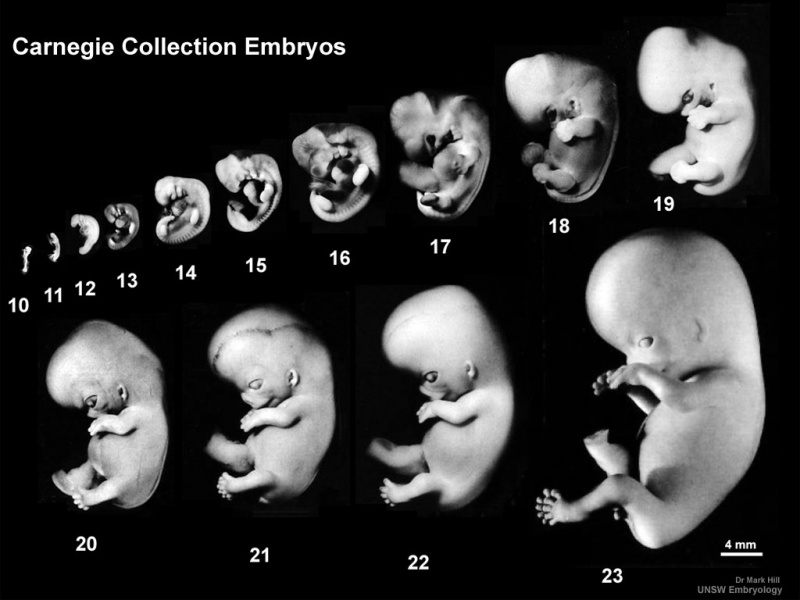
Look at these clear pictures of embryo stages. They help us picture the descriptions found in The Bible, The Quran and Science.
Mountains and Geology in The Bible, The Quran and Science
Mountains look strong and still, but The Bible, The Quran and Science reveals more. The Quran calls mountains “pegs” or “stakes” (78:6-7): “Have We not made the earth a resting place? And the mountains as stakes?”
Geologists now know mountains have deep roots, like tent pegs, that hold the earth’s crust steady. These roots go deep into the mantle and stop earthquakes from shaking too much. This idea was unknown 1400 years ago.
The Bible also praises mountains. Psalm 104 says God set the earth on foundations so it cannot be moved. Some link this to the stable crust. Yet other verses talk about mountains being removed in end times.
In The Bible, The Quran and Science, the peg idea stands out as a clear match with plate tectonics. Mountains form when plates push together, creating roots. This keeps continents from sliding wildly.
Science also says water cycles and rain form from mountains. Both books mention rivers and rain coming from the sky – simple truths that match hydrology. When we hike in mountains today, verses from The Bible, The Quran and Science feel alive.
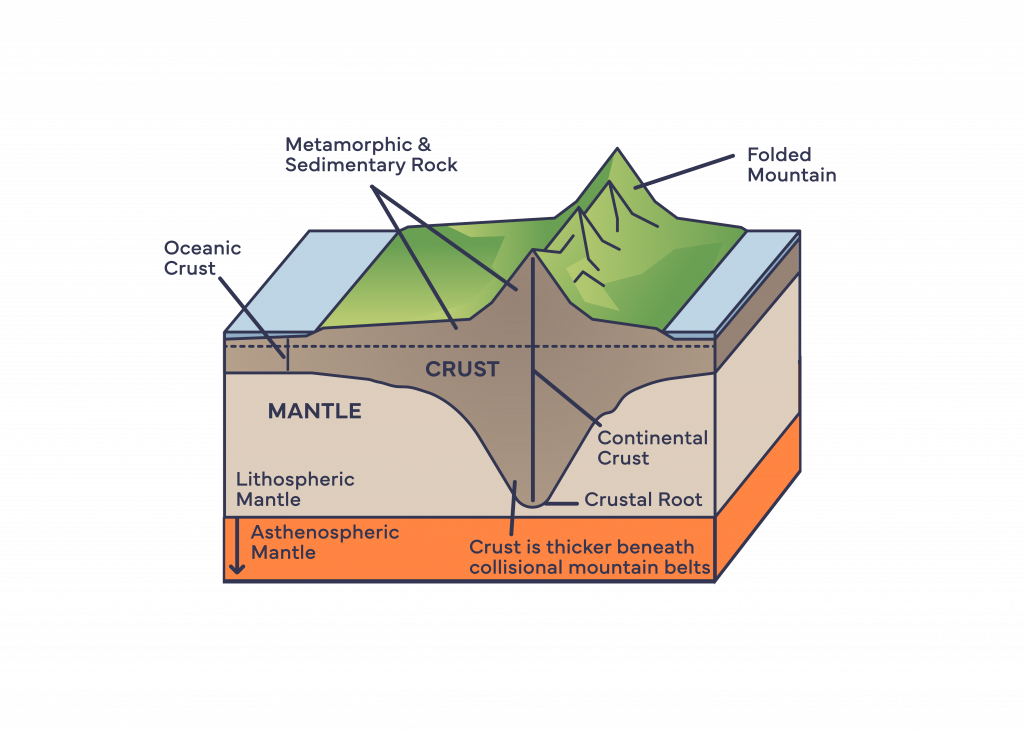

These diagrams show how mountains have deep roots underground – exactly what some verses in The Bible, The Quran and Science describe.
Medicine, Health, and Other Sciences in The Bible, The Quran and Science
Health rules appear in both books. The Bible has laws about clean food and quarantine for sickness (Leviticus). The Quran tells people to eat good things and avoid excess (2:168). It mentions honey as healing (16:69). Modern science confirms honey fights bacteria.
The Quran speaks of water as the source of all life (21:30). Biology agrees – life began in water. It also says every living thing has pairs (51:49), like male and female or positive and negative charges.
The Bible teaches care for the body as a temple. Both texts encourage knowledge-seeking. The Quran says “travel through the earth and see” (29:20). This spirit helped Islamic scientists invent algebra and medicine in the Middle Ages.
In The Bible, The Quran and Science, Bucaille notes the Quran has no clear mistakes about nature, while the Bible has parts (like creation order) that need symbolic reading. Yet many Christians say science and the Bible fit if we understand genres correctly.
Other topics include the water cycle, wind, and clouds – all described simply in both books and proven by meteorology. The Bible, The Quran and Science helps us see these as signs of a thoughtful Creator.
Modern Scholars’ Views on The Bible, The Quran and Science
Dr. Maurice Bucaille’s book started a big conversation. He wrote that the Quran fits modern knowledge better than the Bible in many places. His work is still read worldwide.
Other scientists agree on some points but disagree on others. Some Muslim scholars say every scientific fact was already in the Quran. Some Christian scientists say the Bible is not a science book but teaches truth through stories.
Critics of “scientific miracles” say verses are vague and people read modern ideas back into old words. In The Bible, The Quran and Science, we must stay humble. Science changes; new telescopes or gene studies may bring new views.
Still, many people of faith feel joy when they see harmony. The Bible, The Quran and Science shows that curiosity and belief can live together. Great thinkers like Ibn Sina and Isaac Newton were both scientists and believers.

This is the cover of the famous book that made The Bible, The Quran and Science a popular topic for readers everywhere.
Challenges, Criticisms, and How Faith and Science Work Together
Not everyone agrees with the comparisons in The Bible, The Quran and Science. Some say the Bible’s six-day creation contradicts fossils and carbon dating. Others say the Quran’s verses are too general to count as miracles.
Yet most experts today say there is no real war between faith and science. Many universities have programs on religion and science. The Catholic Church accepts evolution. Many Muslim countries teach modern biology alongside Quran study.
The Bible, The Quran and Science teaches us two books of truth: the book of scripture and the book of nature. One tells us why we are here. The other tells us how the world works. When they seem to differ, we can study more, pray more, and keep learning.
In the end, both the Bible and the Quran invite us to look at the world with wonder. Science does the same. Together they make life richer.
Conclusion: Why The Bible, The Quran and Science Still Matters Today
We have traveled through creation, stars, babies, mountains, and health. The Bible, The Quran and Science is not about winning arguments. It is about understanding our shared human search for truth.
Whether you read the Bible, the Quran, or both, these texts have guided billions. Science has given us phones, medicine, and space travel. When we bring them together with respect, we grow wiser and kinder.
Next time you look at the night sky or hold a newborn, remember the verses we discussed. The Bible, The Quran and Science reminds us that the universe is full of signs for those who think. Keep asking questions. Keep learning. The journey never ends.
Frequently Asked Questions (FAQs)
1. What is the main point of The Bible, The Quran and Science? It compares the holy books with modern discoveries to show areas of agreement and different ways of describing the world.
2. Does the Quran really talk about the Big Bang? Many people say yes. Verse 21:30 describes the heavens and earth being joined then separated, which matches the idea that everything started from one point.
3. Why does the Bible seem to differ from science in creation? Some read Genesis as a poem or symbolic story, not a science timeline. Others see it as literal. Interpretations vary.
4. Who is Maurice Bucaille and why is he important? He was a French doctor who wrote the book The Bible, the Quran and Science after studying both texts and science.
5. Can faith and science live together? Yes! Millions of scientists are believers. They see science as learning how God’s world works.
6. Are there scientific mistakes in the Quran? Most Muslim scholars say no. Some outside critics say the verses are too open to many meanings.
7. Where can I learn more about The Bible, The Quran and Science? Read Bucaille’s book, visit quran.com or biblegateway.com, and watch calm videos from scientists who believe.
References
- Bucaille, Maurice. The Bible, the Quran and Science. Translated by Alastair D. Pannell.
- The Holy Quran (various English translations, including Dr. Mustafa Khattab).
- The Holy Bible (New International Version or King James Version).
- NASA official resources on the Big Bang and universe expansion.
- Embryology textbooks and Carnegie stages diagrams.
- Geological studies on mountain roots and plate tectonics.
- Reviews and summaries from reliable sites discussing Bucaille’s work (2020–2025 publications).
- Quran.com and BibleGateway.com for direct verse checks.
Thank you for reading this detailed, easy-to-understand article on The Bible, The Quran and Science. May it bring knowledge and peace.
