

What Happened When the Vikings Clashed with the Islamic Caliphate? Vikings vs. Islam
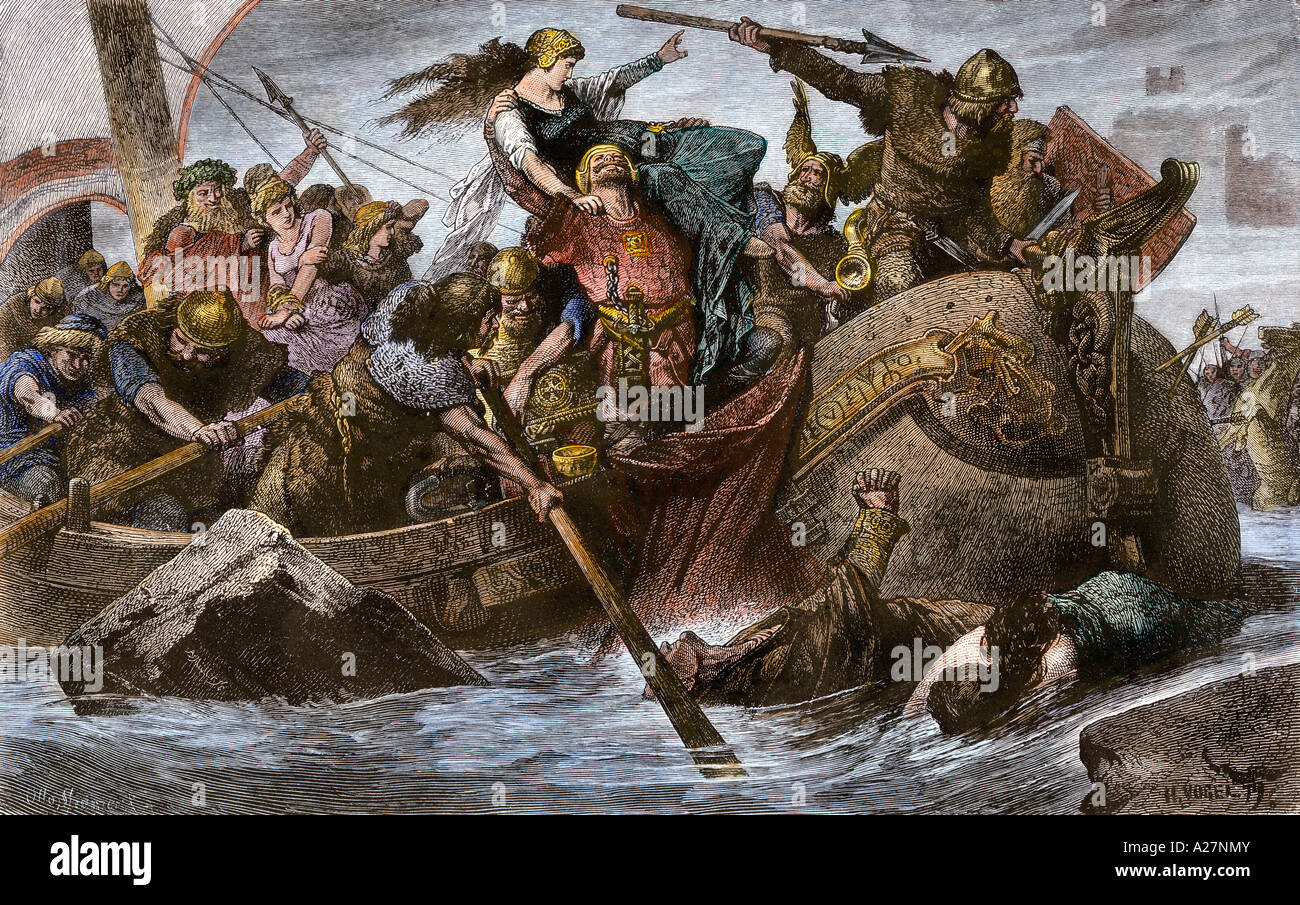
Imagine fierce warriors from icy northern lands sailing in dragon-headed ships across stormy seas. Now picture them facing the golden cities and strong armies of the Islamic world. This is the true story of Vikings vs. Islam. It is full of raids, battles, trade, and surprising meetings between two very different cultures.
Vikings vs. Islam did not mean one huge war. Instead, it was a series of exciting clashes mixed with smart business deals. The Vikings wanted treasure, slaves, and new lands. The Islamic Caliphate had rich cities, fine silver coins, and powerful leaders. When these two worlds met, history changed in ways people still talk about today. In this article, you will learn everything about Vikings vs. Islam – from the first big raid in Spain to peaceful talks on the Volga River. Get ready for an adventure!
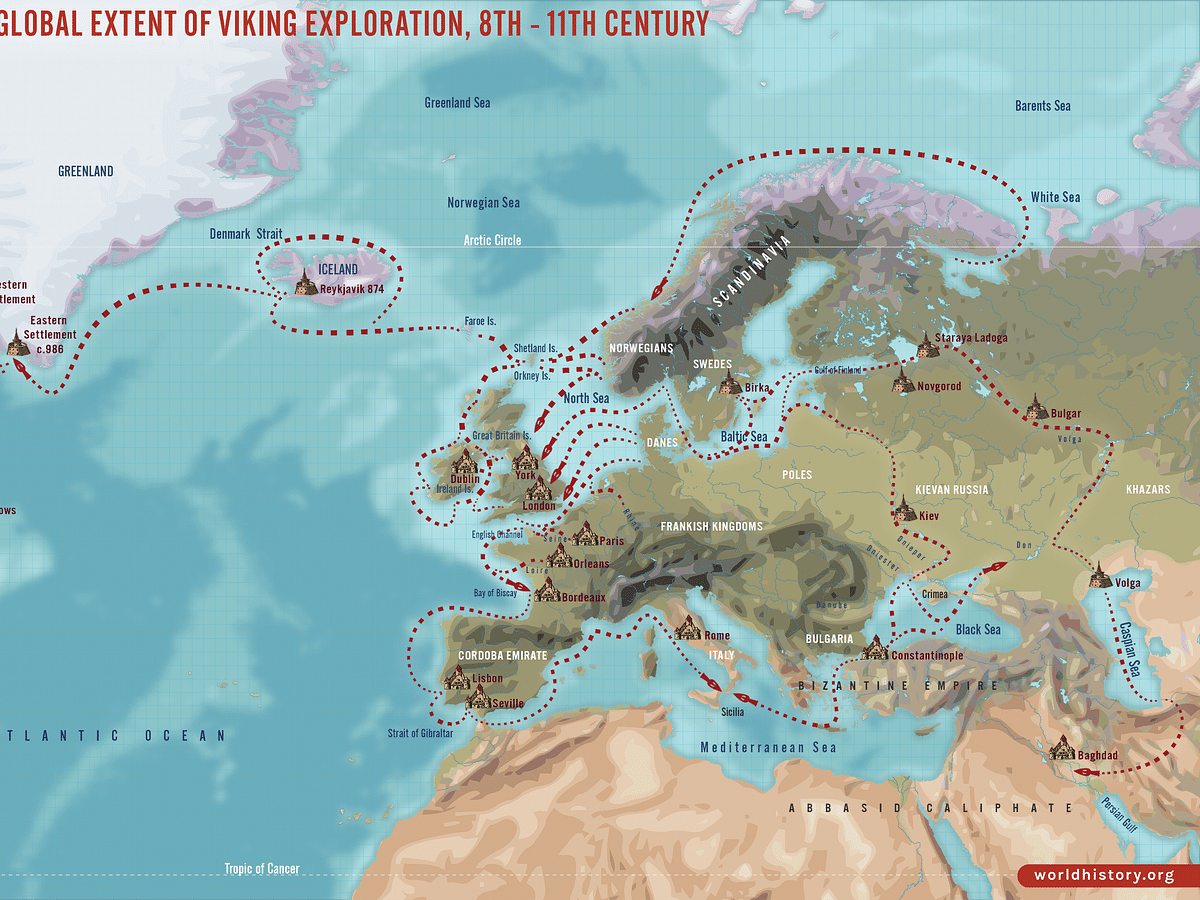
Vikings vs. Islam started because the Vikings were great sailors. They left Scandinavia (today’s Norway, Sweden, and Denmark) in the 8th century. Their longships could sail rivers and oceans fast. The Islamic Caliphate was huge at the same time. It stretched from Spain to Iraq. Muslim rulers built beautiful mosques, schools, and markets. When Vikings sailed south and east, Vikings vs. Islam became real.
Who Were the Vikings?
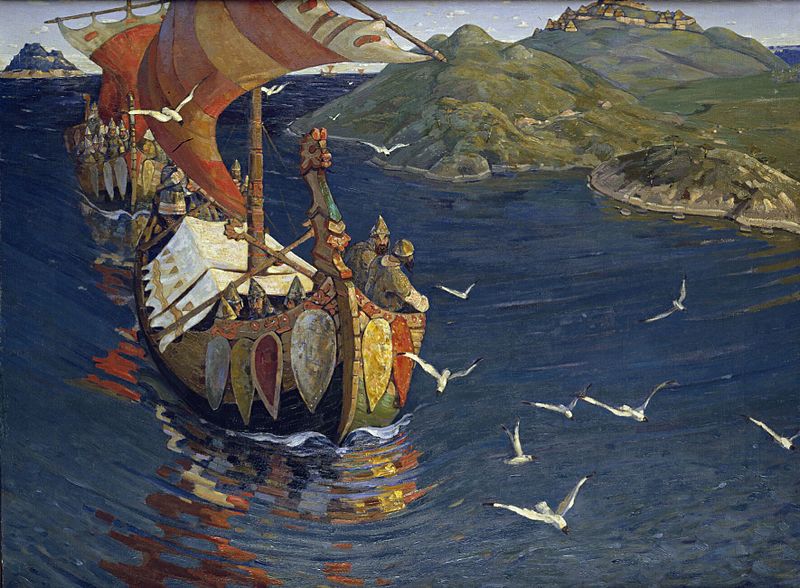
The Vikings were strong people who lived in Scandinavia from about 793 to 1066 AD. They were farmers, traders, and fighters. People called them “Northmen” or “Norsemen.” Their ships had dragon heads on the front to scare enemies. Vikings loved adventure. Young men joined raids to win gold and fame.
Vikings were tall, strong, and brave. They used axes, swords, and shields. They believed in gods like Odin and Thor. When they died, they sometimes had big funerals with ships set on fire. In Vikings vs. Islam, these same warriors met people who prayed to Allah and followed the Quran.
Many Vikings went west to England and France. Others went east as “Rus” – Swedish traders who became the start of Russia. These eastern Vikings met the big Abbasid Caliphate. The western ones met the Umayyad rulers in Spain. Both paths led to Vikings vs. Islam.
Vikings were not just raiders. They settled new lands and traded goods. But when they saw rich Muslim cities, they sometimes attacked. That is how Vikings vs. Islam began.
The Islamic Caliphate: A Powerful Empire
The Islamic Caliphate was one of the greatest powers in the world. After Prophet Muhammad, leaders called Caliphs ruled huge lands. In Spain, the Umayyad Emirate (later Caliphate) made Al-Andalus rich with oranges, silk, and science. In the east, the Abbasid Caliphate had Baghdad as its capital – a city of learning and gold.
Muslim armies were well-trained. They used fast horses, bows, and strong forts. Their cities had high walls and big mosques. The Caliphate traded with everyone – from China to Africa. Silver coins called dirhams filled their markets.
When Vikings heard stories of this wealth, they sailed toward it. Vikings vs. Islam was about to happen.
The First Big Clash: Vikings vs. Islam in Spain, 844 AD
The most famous early fight in Vikings vs. Islam happened in 844. About 54 Viking ships sailed to Spain. They attacked Lisbon first. Then they rowed up the Guadalquivir River to Seville.
Seville was a beautiful Muslim city in Al-Andalus. It had markets, mosques, and palaces. The Vikings surprised everyone. They took the city, stole treasure, and took prisoners. People were scared. The Vikings even tried to burn the big mosque!
But the Muslim leader, Emir Abd ar-Rahman II, was smart. He sent a big army. His soldiers fought the Vikings in several battles. On November 11 or 17, the Muslims won a great victory near Talyata. They killed many Vikings and took their ships. Only a few Vikings escaped.
This clash in Vikings vs. Islam taught both sides lessons. The Vikings learned that Muslim armies were strong and fast. The Caliphate learned to build better coastal defenses. After this, they put guards and forts along the rivers. No one forgot the day Vikings attacked Seville.
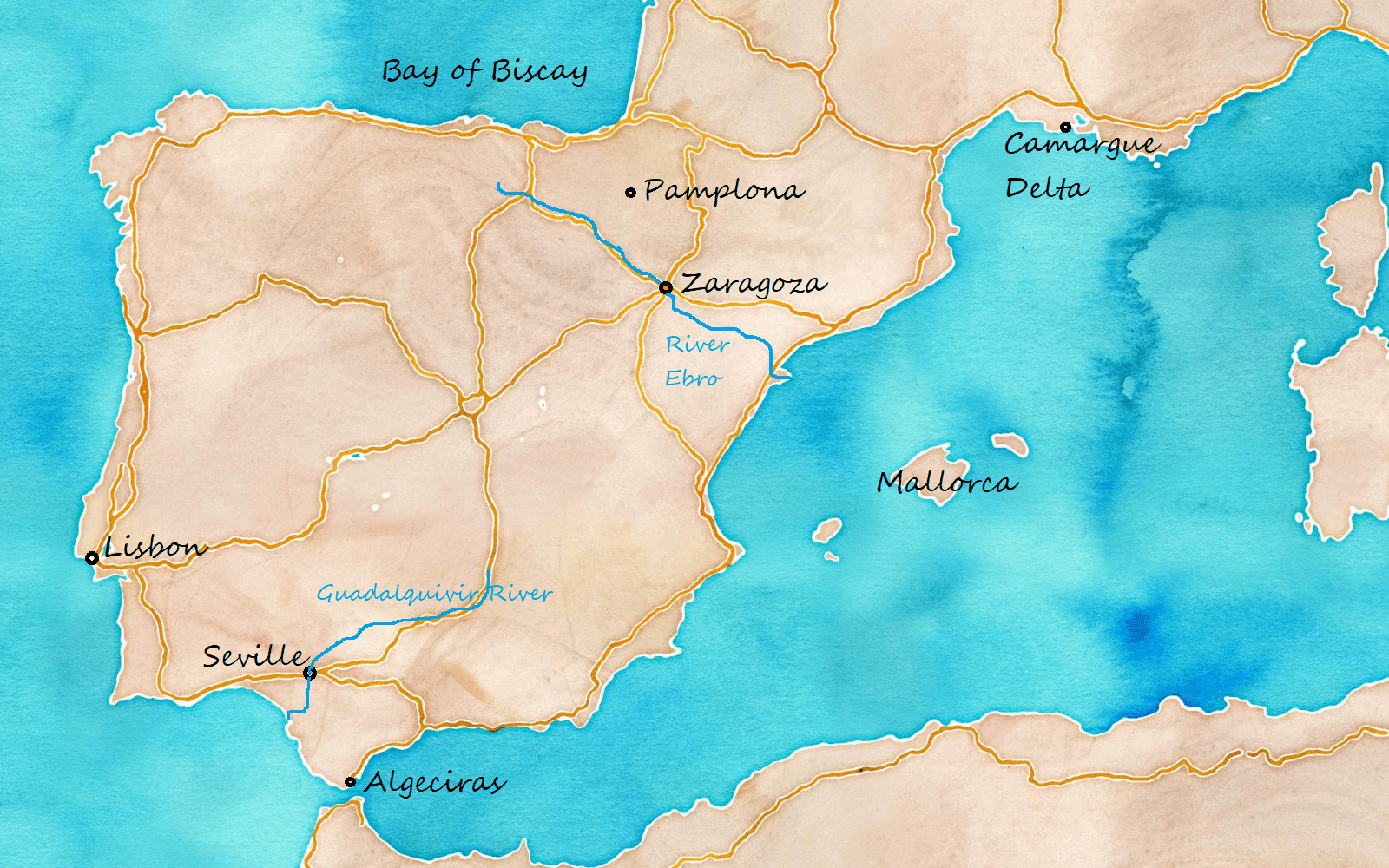

The raid showed how far Vikings could sail. They came from the north, attacked Lisbon, Cádiz, and Medina Sidonia before reaching Seville. Muslim writers like Ibn Hayyan wrote about the fear. They called Vikings “Majus” – fire-worshippers. The first big fight in Vikings vs. Islam changed how Spain defended its coasts forever.
More Raids: Bjorn Ironside and Hastein’s Big Trip (859-862)
Fifteen years later, two famous Viking leaders – Bjorn Ironside and Hastein – led another adventure in Vikings vs. Islam. They took 62 ships from France to Spain. They tried to attack again but faced stronger defenses.
The Vikings sailed through the Strait of Gibraltar into the Mediterranean Sea. This was new for them! They raided North Africa, a Muslim land called the Maghreb. In Nekor (Morocco), they stayed eight days and took everything. Muslim soldiers tried to stop them, but the Vikings won that fight.
Then they went back to Spain. They burned a mosque in Algeciras. They attacked cities in Murcia and the Balearic Islands. Later, they went to Italy and even tricked a city by pretending one leader was dead!
This long trip showed the daring side of Vikings vs. Islam. The Vikings reached deep into Muslim lands. But they also lost many ships on the way home. Muslim forces in Spain destroyed several Viking boats. Only about 20 ships returned.
These raids in Vikings vs. Islam proved Vikings were brave, but the Caliphate was ready. After these attacks, the Islamic rulers in Spain made stronger navies and walls. The clashes helped both sides grow smarter.
Eastern Meetings: Rus Vikings, Trade, and Ibn Fadlan
While Western Vikings raided Spain, Eastern Vikings (called Rus) went another way. They sailed rivers like the Volga to the Caspian Sea. Here, Vikings vs. Islam was mostly about trade, not just fighting.
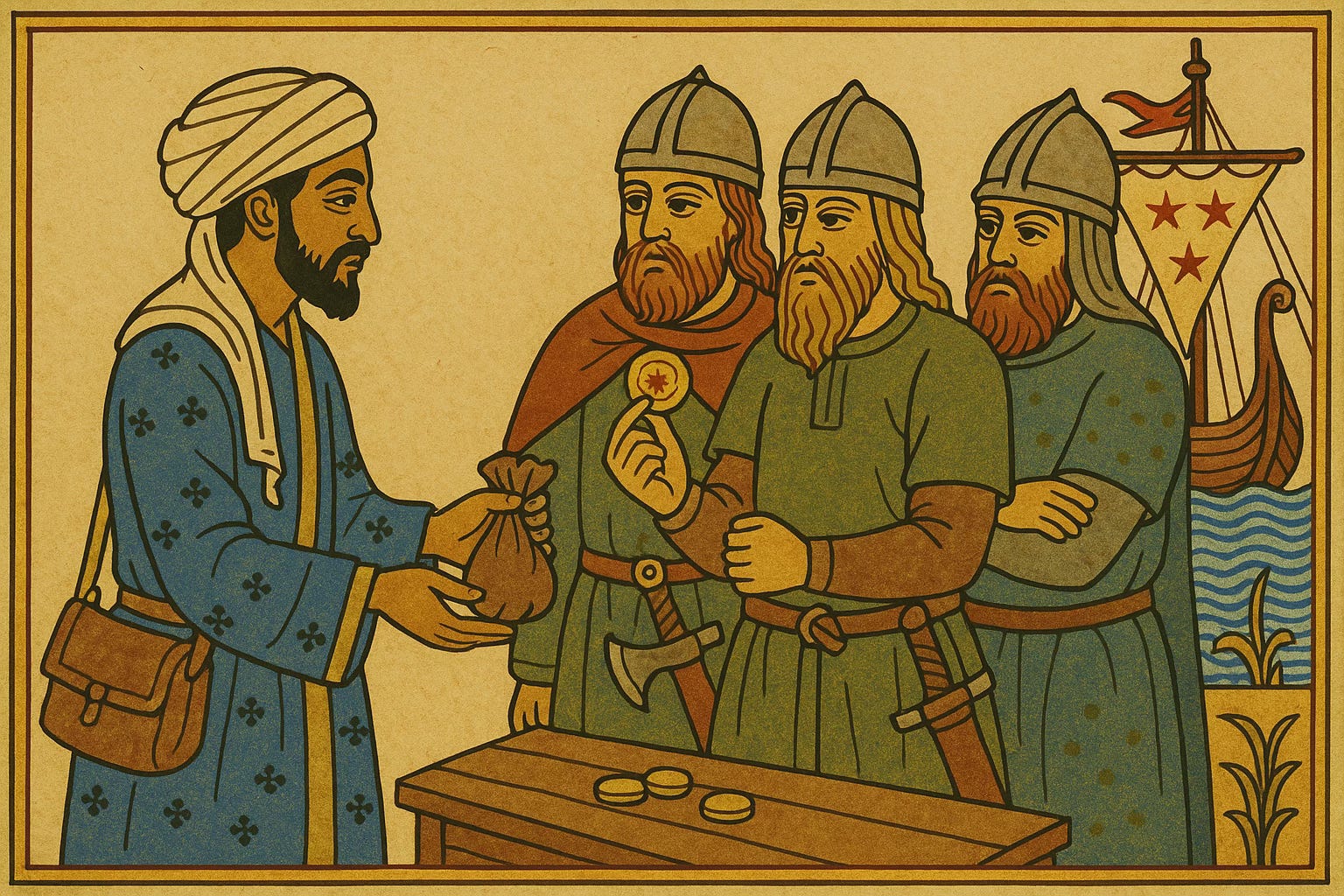
The Abbasid Caliphate in Baghdad loved trading with the Rus. Vikings brought furs, slaves, amber, and honey. Muslims gave them beautiful silver dirhams, silk, and spices. Thousands of Muslim coins have been found in Viking lands. This shows Vikings vs. Islam could also mean good business!
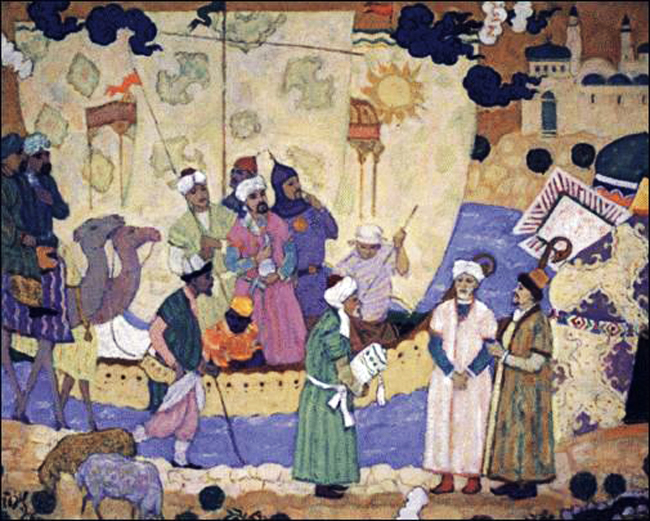
In 922, a Muslim writer named Ahmad ibn Fadlan met the Rus. The Caliph sent him north to teach Islam to the Bulgars. Ibn Fadlan wrote a famous book called the Risala. He described the Vikings in detail.
He said the Rus were “tall as date palms, blond and ruddy.” They wore short clothes even in cold weather. They carried axes and swords. Ibn Fadlan did not like their hygiene – they washed in one bowl! But he was amazed by their strength and tattoos.
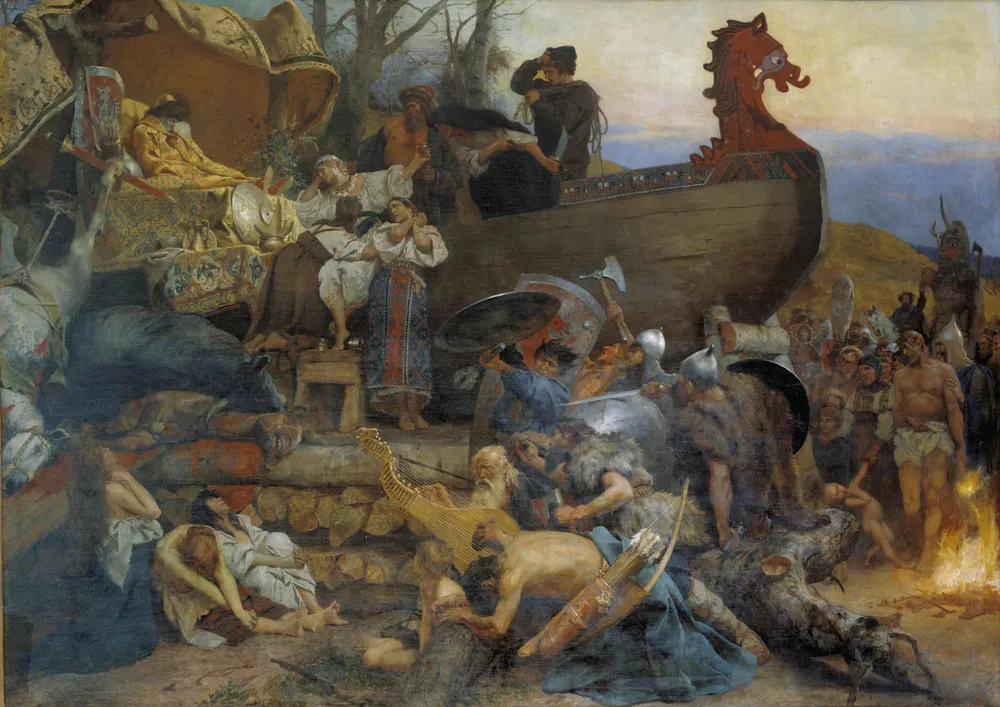
The most famous part is the ship funeral. When a chief died, the Rus put him on a ship with treasures, animals, and a slave girl who chose to die with him. They burned everything in a big fire. Ibn Fadlan watched this and wrote every detail. This story is one of the best pictures of Viking life we have.
In Vikings vs. Islam, Ibn Fadlan’s meeting was peaceful. It shows Vikings and Muslims could talk and learn from each other.

Caspian Sea Raids: Vikings vs. Islam in the East
Trade was not always peaceful. The Rus also raided Muslim lands around the Caspian Sea. These fights are part of Vikings vs. Islam, too.
In 913, 500 Viking ships attacked areas in today’s Iran and Azerbaijan. They pillaged towns in Gorgan, Gilan, and Mazandaran. They took slaves and goods. On the way back, local Muslim forces and Khazars attacked them. Many Vikings died.
In 943, the Rus captured the city of Bardha’a in Azerbaijan. They held it for months. But sickness (dysentery) forced them to leave with their treasure.
Other raids happened until 1041. The Rus wanted silver and slaves. Muslim rulers fought back with armies and ships. These Caspian clashes in Vikings vs. Islam were smaller than Spain but showed Vikings could reach far into the Caliphate.
Even so, trade continued. The Caliphate stayed strong, and Vikings kept coming for business.
Trade, Culture, and Lasting Impacts of Vikings vs. Islam
Vikings vs. Islam was more than battles. It changed both worlds. The
Vikings brought home thousands of dirham coins. Archaeologists find them in hoards in Sweden, Norway, and England. This silver helped the Vikings buy land and build power.
Muslims wrote books about Vikings. They learned about northern people and their customs. Some Vikings may have learned about Islam. A few stories say Vikings even took Muslim ideas home.
In Spain, after the raids, the Caliphate built better ships and forts. This helped them stay safe. In the east, trade routes grew stronger. The Rus helped create Kyivan Rus – the start of Russia and Ukraine.
Culture mixed too. Viking art shows eastern patterns. Muslim stories mention tall blond warriors. The 13th Warrior movie is based on Ibn Fadlan’s book!
Vikings vs. Islam helped both sides see the world bigger. The Vikings learned that Muslim lands were rich and strong. Muslims saw that northern warriors were skilled sailors.


Why Did Vikings Clash with the Islamic Caliphate?
Vikings wanted wealth. Muslim cities had gold, silk, and slaves. The Caliphate wanted to protect its lands and trade. Sometimes they fought. Sometimes they traded.
Religion played a small part. Vikings followed old gods. Muslims followed Islam. But most clashes were about money, not faith.
The outcomes were clear. Vikings never conquered Muslim lands. The Caliphate never invaded Scandinavia. But Vikings vs. Islam left stories, coins, and lessons that last today.
In the end, Vikings vs. Islam shows how two strong cultures can meet, fight, trade, and learn. It is a story of courage, smart leaders, and surprising friendships across the seas.
Vikings vs. Islam reminds us that history is full of adventures. From Seville to the Caspian, these clashes shaped the medieval world. Next time you see a Viking movie or visit a mosque, remember the brave sailors who met the Caliphate long ago.
The story of Vikings vs. Islam is still exciting after 1,200 years!

Disclaimer
This article is for educational and entertainment purposes only. It is based on historical records, archaeology, and ancient writings like Ibn Fadlan’s Risala. Different historians may have slightly different views on dates or details. Vikings vs. Islam is a complex topic, and we respect all cultures involved. No modern conflicts are intended or implied.
FAQs About Vikings vs. Islam
1. Did Vikings ever win a big war against the Islamic Caliphate? No. In Vikings vs. Islam, Muslims usually pushed the Vikings back in Spain. But the Vikings won some small raids and lots of trade money.
2. Who was Ibn Fadlan, and why is he important to Vikings vs. Islam? Ibn Fadlan was a Muslim traveler in 922. Hemet the Rus Vikings and wrote a detailed book. His story is the best description we have of Viking life.
3. Where did the main clashes in Vikings vs. Islam happen? In Spain (Seville 844 and later raids) and around the Caspian Sea (913 and 943).
4. Did Vikings bring home anything from the Islamic world? Yes! Thousands of silver dirham coins. We still find them in Viking graves and hoards.
5. Was Vikings vs. Islam about religion? Mostly no. It was about treasure and land. Religion was different, but trade and raids were the main reasons.
6. Are there movies about Vikings vs. Islam? Yes! The 13th Warrior is based on Ibn Fadlan’s real meeting with Vikings.
7. Did any Vikings become Muslim? Some Rus Vikings in the east may have learned about Islam, but no big conversions happened.
8. What happened after the clashes in Vikings vs. Islam? Trade grew stronger. Both sides built better defenses and learned new skills.
9. Can I visit places from Vikings vs. Islam today? Yes! Go to Seville in Spain or see Viking silver in Swedish museums. The Volga River area also has a history.
10. Why is Vikings vs. Islam important today? It shows early global connections. Two different worlds met, fought, and traded – just like our world now.
References
- Wikipedia: Viking raid on Seville (844)
- Wikipedia: Caspian expeditions of the Rus.
- Ibn Fadlan’s Risala (Account of the Rus, 922 AD)
- Ibn Hayyan and other Muslim chroniclers (accounts of raids in Al-Andalus)
- Historical sources on Bjorn Ironside and Hastein’s Mediterranean expedition
- Archaeology reports on Viking hoards with Islamic dirhams
- World History Encyclopedia: Map of Viking Exploration
- Primary Arabic texts translated in modern books about the Abbasid Caliphate and the Rus trade
These sources help us understand the real events of Vikings vs. Islam. For more reading, check libraries or trusted history websites.
