

Khalid bin Walid! A fearless general (خالد بن ولید ! ایک بے مصال سپہ سالار )
Stands as one of the greatest military leaders in history. His name inspires millions even today. Born in the deserts of Arabia more than 1,400 years ago, he changed the course of empires with his bravery and smart thinking. In this comprehensive article, we will delve into every aspect of his remarkable life in simple, easy-to-understand English. We will talk about his family, his battles, his tactics, and why people still call him a hero. Khalid bin Walid! A fearless general (خالد بن ولید ! ایک بے مصال سپہ سالار ) never lost a single battle in over 100 fights. That is why his story teaches us about courage, faith, and leadership.
Let us begin with why this topic matters. Many young people today want to know about real heroes who lived with honor. Khalid bin Walid! A fearless general (خالد بن ولید ! ایک بے مصال سپہ سالار ) was not just a soldier. He was a thinker, a planner, and a man who put his faith first. His life shows how one person can make a big difference. We will use simple words so everyone can understand. By the end, you will know why Khalid bin Walid! A fearless general (خالد بن ولید ! ایک بے مصال سپہ سالار ) is remembered as the Sword of Allah.

This picture shows Khalid bin Walid! A fearless general (خالد بن ولید ! ایک بے مصال سپہ سالار ) leading his men on horseback, ready for battle. It captures his strong spirit.
Early Life and Family Background of Khalid bin Walid! A fearless general (خالد بن ولید ! ایک بے مصال سپہ سالار )
Khalid bin Walid! A fearless general (خالد بن ولید ! ایک بے مصال سپہ سالار ) was born around the year 585 in the city of Mecca. His full name was Khalid ibn al-Walid ibn al-Mughira al-Makhzumi. He belonged to the powerful Banu Makhzum clan of the Quraysh tribe. This clan was famous for its wealth, smart leaders, and skill in trade and war. His father, al-Walid ibn al-Mughira, was a respected man in Mecca. He solved disputes and was known as a tough opponent to new ideas. His mother was al-Asma bint al-Harith, also called Lubaba al-Sughra. She came from the Banu Hilal tribe, which lived a simple Bedouin life in the desert.
Growing up, Khalid learned riding horses, fight with swords, and plan attacks from a young age. His family sent him to live with Bedouin tribes in the desert as a child. This was a common custom. It made him tough and taught him survival skills. He became an expert in desert warfare. Khalid bin Walid! A fearless general (خالد بن ولید ! ایک بے مصال سپہ سالار ) had brothers and sisters, but details about them are few. His family was rich, so he had the best training.
His mother later became a Muslim. She had family ties to the Prophet Muhammad through marriage. One of her half-sisters was Maymuna, who married the Prophet. This connection helped Khalid later in life. Family was very important in Arab culture back then. It gave support and status. Khalid bin Walid! A fearless general (خالد بن ولید ! ایک بے مصال سپہ سالار ) came from a family that valued honor and bravery above all.
In his early years, Khalid opposed the new faith of Islam. He fought against the Muslims in some battles before changing his mind. But his family background gave him the courage to stand up for what he believed. Even as a boy, he showed fearless qualities. Stories say he was tall, strong, and had a voice like another great leader, Umar. People who could not see well sometimes mixed them up.
Khalid bin Walid! A fearless general (خالد بن ولید ! ایک بے مصال سپہ سالار ) learned from the harsh desert life. He knew how to find water, ride long distances, and use the land to win fights. These skills made him ready for big challenges later. His family taught him loyalty to his tribe, but his heart later led him to a bigger cause.
How Khalid bin Walid! A fearless general (خالد بن ولید ! ایک بے مصال سپہ سالار ) Converted to Islam
At first, Khalid bin Walid! A fearless general (خالد بن ولید ! ایک بے مصال سپہ سالار ) was on the side against the Prophet Muhammad. He fought in the Battle of Uhud in 625 as a leader of the Meccan army. His clever move around the mountain helped his side win that day. But something inside him changed over time.
In the year 627 or 629, Khalid decided to become a Muslim. He went to the Prophet with two other important men, Amr ibn al-As and Uthman ibn Talha. The Prophet welcomed him warmly. Khalid bin Walid! A fearless general (خالد بن ولید ! ایک بے مصال سپہ سالار ) moved to Medina after the Treaty of Hudaybiyya. This was a turning point. He left his old life of fighting against Islam and joined the faith fully.
His conversion was brave because his family and tribe were powerful in Mecca. Many people looked up to him. By becoming Muslim, he risked everything. But his faith gave him strength. Khalid bin Walid! A fearless general (خالد بن ولید ! ایک بے مصال سپہ سالار ) said he wanted to fight for truth now. The Prophet saw his talent and gave him important jobs.
This change shows how Khalid bin Walid! A fearless general (خالد بن ولید ! ایک بے مصال سپہ سالار ) was not afraid to admit when he was wrong. He became one of the most loyal companions. His family supported him in different ways. His mother had already accepted Islam, so there was some understanding at home.
Battles During the Time of Prophet Muhammad
After converting, Khalid bin Walid! A fearless general (خالد بن ولید ! ایک بے مصال سپہ سالار ) proved his worth quickly. His first big test came in the Battle of Mu'ta in 629. This was the first fight between Muslims and the powerful Byzantine Empire. Three Muslim leaders died one after another. Khalid took command without being asked. He used smart moves to save the army and bring everyone back safely. The Prophet was so happy that he gave Khalid a special title: Sayf Allah, or Sword of Allah. This name means God’s unsheathed sword. It fit perfectly because Khalid bin Walid! A fearless general (خالد بن ولید ! ایک بے مصال سپہ سالار ) fought like a sharp blade that never breaks.
In the Conquest of Mecca in 630, Khalid led a group of Bedouin fighters. He entered the city and helped make it peaceful. Only a few people died, showing his control. Then came the Battle of Hunayn. Khalid was in the front line against a big tribe called Hawazin. His courage helped turn a tough moment into victory.
Khalid bin Walid! A fearless general (خالد بن ولید ! ایک بے مصال سپہ سالار ) also went on smaller missions. He destroyed an idol called al-Uzza in Nakhla. He led an expedition to a tribe called Banu Jadhima. There was some confusion, and things did not go perfectly, but the Prophet forgave him. These events teach us that even great leaders make mistakes, but true faith helps them learn.
Another task was inviting the people of Najran to Islam. Khalid explained the faith kindly, and many joined. He showed that a fearless general can also be a wise teacher. All these battles under the Prophet built his experience. Khalid bin Walid! A fearless general (خالد بن ولید ! ایک بے مصال سپہ سالار ) learned to mix speed, surprise, and faith in every fight.
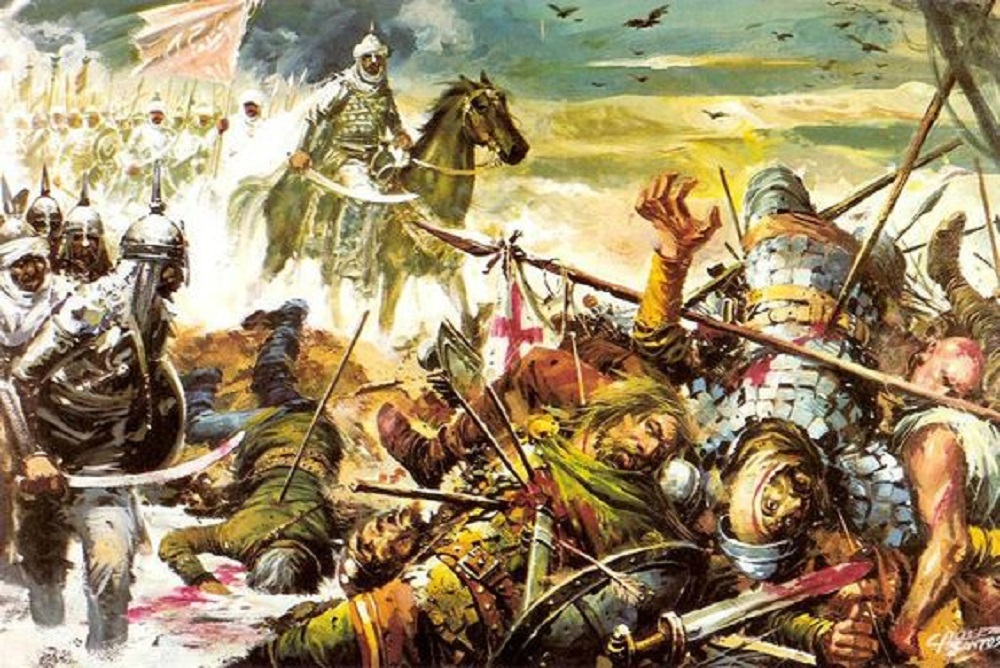
Here is an artistic view of Khalid bin Walid! A fearless general (خالد بن ولید ! ایک بے مصال سپہ سالار ) in the middle of battle, showing the chaos and his leadership.
The Ridda Wars: Keeping the Faith Strong
When the Prophet passed away in 632, many tribes stopped following the new rules. Some refused to pay zakat or claimed to be false prophets. The first Caliph, Abu Bakr, asked Khalid bin Walid! A fearless general (خالد بن ولید ! ایک بے مصال سپہ سالار ) to lead the army. This was the Ridda Wars, or Wars of Apostasy.
Khalid moved fast to Najd. He fought at the Battle of Buzakha against a leader named Tulayha. With clever talks, some tribes joined the Muslims. Khalid won and brought peace to the area. Then he faced the biggest challenge: Musaylima the Liar in Yamama. This false prophet had a huge army from the Banu Hanifa tribe.
The fight was hard. Khalid used fresh troops and smart plans. He attacked the “Garden of Death” where Musaylima hid. In the end, the Muslims won, and Musaylima was killed. Khalid bin Walid! A fearless general (خالد بن ولید ! ایک بے مصال سپہ سالار ) showed he could handle rebellion with both sword and wisdom. These wars kept Islam united.
During this time, Khalid married a widow named Layla bint al-Minhal after a difficult event with her late husband. This part of history has some debate among scholars, but it shows the complex life of a warrior in those days.
Conquering Iraq: Speed and Surprise
Abu Bakr sent Khalid bin Walid! A fearless general (خالد بن ولید ! ایک بے مصال سپہ سالار ) to Iraq in 633. The goal was to face the Sassanid Persian Empire, one of the strongest in the world. Khalid had only about 1,000 men at first, mostly from desert tribes.
He won battle after battle. At Walaja, he used a double envelopment tactic – attacking from both sides like a pincer. At Ullais, he defeated a big Persian force near the river. He captured the city of Hira and made treaties with local tribes. Khalid took Anbar and Ayn al-Tamr too. His army grew with new volunteers.
Khalid bin Walid! A fearless general (خالد بن ولید ! ایک بے مصال سپہ سالار ) marched through hard desert lands. He used camels to carry water and moved faster than anyone expected. This lightning speed shocked the enemy. He left strong leaders behind to hold the land. His Iraq campaign opened the door for later Muslim rule in Persia.
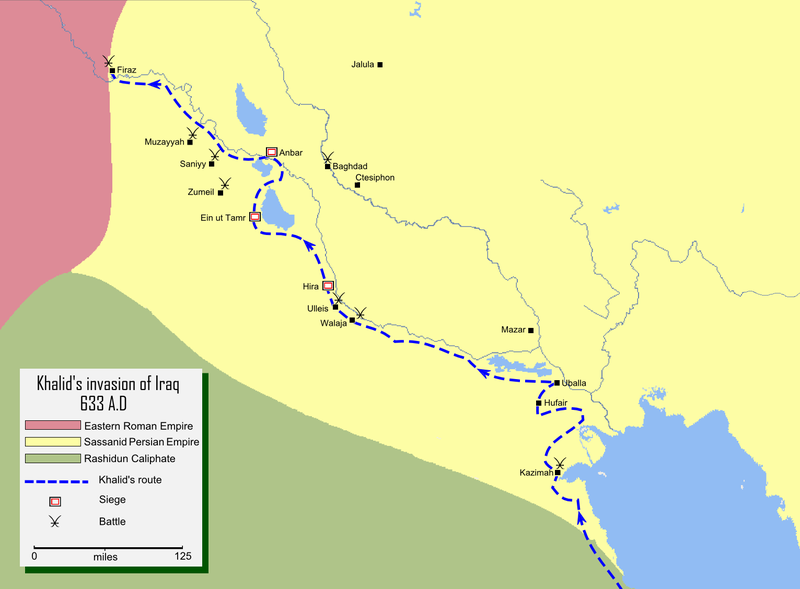
This map shows the route Khalid bin Walid! A fearless general (خالد بن ولید ! ایک بے مصال سپہ سالار ) took in Iraq. You can see how he moved quickly across rivers and deserts.
The Big Move to Syria and the Desert March
In 634, Abu Bakr ordered Khalid bin Walid! A fearless general (خالد بن ولید ! ایک بے مصال سپہ سالار ) to help in Syria against the Byzantine Empire. He left Iraq and did something amazing: a long march across the Syrian Desert with almost no water. He used camels to store water in their stomachs and guided his men safely. This march is still studied as a masterpiece of logistics.
He joined other Muslim leaders. They captured Bosra, the first big city in Syria. Then came the Battle of Ajnadayn. Khalid helped win against a large Byzantine army. Next was the siege of Damascus. Khalid blocked the gates and entered after tough fighting. The people signed a fair treaty.
Khalid bin Walid! A fearless general (خالد بن ولید ! ایک بے مصال سپہ سالار ) became the supreme commander. His men trusted him completely. He knew the land and used it well.
The Battle of Yarmouk: Greatest Victory
The Battle of Yarmouk in 636 was the biggest test. The Byzantine Emperor sent over 40,000 soldiers. Khalid had about 36,000 Muslims. He placed his army north of the Yarmouk River. He used hills and a bridge to trap the enemy.
Khalid split his cavalry into groups. He pretended to retreat to pull the Byzantines forward. Then his men attacked from the sides. They took the bridge and blocked escape. The battle lasted days, but on August 20, the Muslims won completely. It was one of the most important battles in history. It opened Syria and beyond for Islam.
Khalid bin Walid! A fearless general (خالد بن ولید ! ایک بے مصال سپہ سالار ) used psychology too. He made the enemy think they were winning, then struck hard. This is why he is called a military genius.

See this dramatic picture of the Battle of Yarmouk. It shows the fierce fighting where Khalid bin Walid! A fearless general (خالد بن ولید ! ایک بے مصال سپہ سالار ) led his army to victory.

Another old-style drawing of the battle, showing flags and warriors just like in Khalid’s time.
Dismissal by Caliph Umar and Later Life
After Yarmouk, the new Caliph Umar removed Khalid bin Walid! A fearless general (خالد بن ولید ! ایک بے مصال سپہ سالار ) from command. Some say it was because Umar wanted to stop any hero worship. Others mention complaints about money or past events. Khalid accepted it quietly. He said he fought for God, not for power.
He lived in Homs, Syria. He still gave advice when asked. Khalid bin Walid! A fearless general (خالد بن ولید ! ایک بے مصال سپہ سالار ) stayed humble. He died in 642 at around age 57. Some say in Medina, but most believe in Homs. His grave is still visited today.
Even without command, his spirit lived on. He taught younger generals his ways.
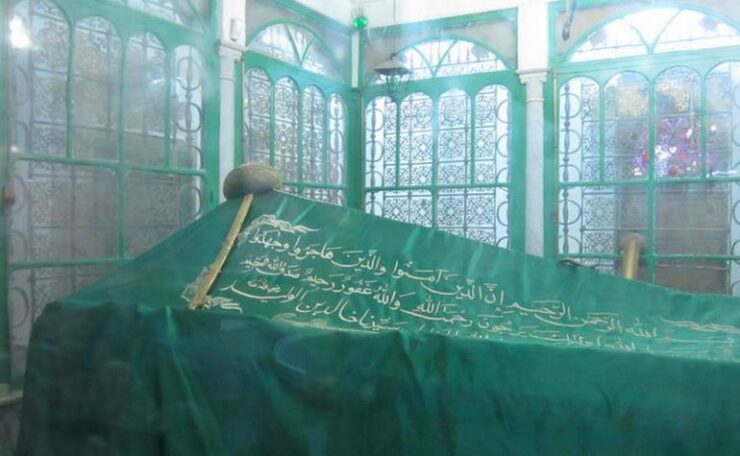
This is the tomb of Khalid bin Walid! A fearless general (خالد بن ولید ! ایک بے مصال سپہ سالار ) in Homs. People go there to remember his bravery.
Military Tactics: Why Khalid bin Walid! A fearless general (خالد بن ولید ! ایک بے مصال سپہ سالار ) Was Unbeatable
Khalid bin Walid! A fearless general (خالد بن ولید ! ایک بے مصال سپہ سالار ) won because of smart tactics. He loved mobility. His cavalry moved fast and hit hard. He used surprise attacks at night or from hidden places. In Walaja, he hid men behind hills and attacked from two sides.
He understood psychology. He made enemies overconfident, then trapped them. Terrain was his friend – deserts, rivers, and mountains. Khalid bin Walid! A fearless general (خالد بن ولید ! ایک بے مصال سپہ سالار ) divided big armies into small, quick groups. He never fought fair when he could fight smart.
Modern armies study his moves. In business, leaders use their ideas for quick decisions and teamwork. He mixed faith with action. Before every battle, he prayed. This gave his men an unbreakable spirit.
Khalid bin Walid! A fearless general (خالد بن ولید ! ایک بے مصال سپہ سالار ) fought over 100 battles without one loss. That record is rare in all of history. His tactics are still in books at military schools.
Here is a famous sword linked to the time of Khalid bin Walid! A fearless general (خالد بن ولید ! ایک بے مصال سپہ سالار ). It reminds us of his fighting spirit.
Family Life of Khalid bin Walid! A fearless general (خالد بن ولید ! ایک بے مصال سپہ سالار )
Family was close to Khalid’s heart. He had wives, including Asma bint Anas and Layla bint al-Minhal. He had three known sons: Sulayman, Abd al-Rahman, and Muhajir. His sons continued some of his legacy in small ways.
Khalid bin Walid! A fearless general (خالد بن ولید ! ایک بے مصال سپہ سالار ) balanced war with home life when possible. In those days, warriors traveled a lot, buttheir familiesy gave them strength. His mother’s conversion helped him accept Islam more easily. His children learned the values of bravery and faith.
Today, many families name boys after him to remember courage. His family tree shows strong Quraysh roots mixed with faith.
Legacy: Lessons for Modern Life
The legacy of Khalid bin Walid! A fearless general (خالد بن ولید ! ایک بے مصال سپہ سالار ) is huge. Muslims around the world honor him. In Pakistan, India, and Arab countries, his name is in books, movies, and talks. He proved that faith plus skill wins.
Leaders today learn from him: be decisive, use what you have, and stay humble. In sports or business, his never-give-up attitude helps. Khalid bin Walid! A fearless general (خالد بن ولید ! ایک بے مصال سپہ سالار ) showed that true power comes from serving a higher purpose.
His story is part of Islamic history books. Historians call him one of the best generals ever. He helped spread Islam across big lands without losing once.
Khalid bin Walid! A fearless general (خالد بن ولید ! ایک بے مصال سپہ سالار ) lived a full life. From Mecca boy to world changer, his path teaches us all.
Khalid bin Walid! A fearless general (خالد بن ولید ! ایک بے مصال سپہ سالار ) is a name that will live forever. His courage, tactics, and faith make him unmatched. We hope this article helps you understand him better. Remember his lessons in your own life – face challenges with a brave heart.
Disclaimer
This article is written for educational and informational purposes only. It is based on historical records and traditional accounts. Different sources may have small differences in details. We do not promote any violence or conflict. History should be studied with respect and an open mind. The views here are not meant to judge past events but to learn from them.
FAQs
- Who was Khalid bin Walid? A fearless general (خالد بن ولید ! ایک بے مصال سپہ سالار )? He was a famous Muslim general who never lost a battle and helped spread Islam through smart wars.
- Why is he called the Sword of Allah? The Prophet Muhammad gave him this title after the Battle of Mu'ta for his brave leadership.
- What was his biggest battle? The Battle of Yarmouk in 636, where he defeated a much larger Byzantine army.
- Did Khalid bin Walid! A fearless general (خالد بن ولید ! ایک بے مصال سپہ سالار ) have a family? Yes, he had wives and three sons: Sulayman, Abd al-Rahman, and Muhajir.
- Was he ever defeated? No, he won every battle he commanded – over 100 in total.
- Why did Caliph Umar remove him from command? Historians say it was to avoid too much fame around one person and to share leadership.
- Where is his tomb? It is in Homs, Syria, and people still visit it.
- Can modern leaders learn from him? Yes, his tactics of speed, surprise, and team spirit are used in business and strategy today.
- When did he convert to Islam? Around 627-629, after seeing the truth of the faith.
- What made him fearless? Strong faith, desert training, and belief in justice gave him unmatched courage.
References
- Wikipedia: Khalid ibn al-Walid (detailed biography and battles).
- World History Encyclopedia: Maps and articles on his invasions of Iraq and Syria.
- Books like "The Sword of Allah" by A.I. Akram (classic study of his campaigns).
- Islamic history sources, including accounts from early Muslim historians like Al-Tabari.
- Modern analyses from military websites and academic papers on his tactics.
