

Battle of Nahrawan
The Battle of Nahrawan stands as one of the most tragic and pivotal events in early Islamic history. It occurred in July 658 CE (Safar 38 AH) near the Nahrawan Canal in what is now Iraq, close to modern-day Baghdad. In this clash, the forces of Caliph Ali ibn Abi Talib confronted a group of rebels known as the Kharijites.

The Battle of Nahrawan marked a deep internal division among Muslims who had once fought together. It arose from disagreements following the Battle of Siffin and highlighted issues of justice, authority, and interpretation of Islamic teachings. Even today, the Battle of Nahrawan is studied for its lessons on unity, extremism, and the challenges of leadership in turbulent times.
Historical Background Leading to the Battle of Nahrawan
To understand the Battle of Nahrawan, we must go back to the early days of the Rashidun Caliphate. After the death of Prophet Muhammad (peace be upon him), the Muslim community faced questions about leadership. Ali ibn Abi Talib, a close companion and cousin of the Prophet, eventually became the fourth caliph in 656 CE.
His caliphate was not peaceful. Disputes arose, especially with Muawiya ibn Abi Sufyan, the governor of Syria, who refused to pledge allegiance and demanded justice for the murder of the third caliph, Uthman ibn Affan. This tension led to the Battle of Siffin in 657 CE, fought along the Euphrates River.
In the Battle of Siffin, both sides were on the brink of a decisive outcome when Muawiya's forces raised copies of the Quran on their spears. They called for arbitration according to the Book of God. Many in Ali's army, particularly from Kufa, supported stopping the fight to avoid shedding more Muslim blood. Ali agreed to arbitration, appointing representatives to negotiate.
However, a faction within Ali's army strongly opposed this decision. They believed that human arbitration went against the principle "There is no judgment except Allah's" (La hukma illa lillah). They argued that the Quran already provided clear guidance on dealing with rebels and that negotiation was a mistake. This group viewed the arbitration as a compromise that undermined divine authority.
These dissenters first gathered at Harura, near Kufa, and later moved to the Nahrawan area. Because they "went out" from the main body of Muslims, they became known as Kharijites (from the Arabic word "khawarij," meaning those who secede or go out). At first, they were not violent toward Ali personally, but their ideology grew extreme.
The Kharijites declared that anyone who disagreed with their strict view was no longer a true Muslim and could be fought or even killed. They began attacking villages, killing civilians, and creating chaos in the countryside. This violence turned them into a serious threat that Ali could not ignore while preparing to face Muawiya again.
What Sparked the Kharijite Rebellion?
The roots of the Kharijite movement lie in sincere but rigid religious zeal mixed with political dissatisfaction. Many Kharijites were devout worshippers who had fought bravely in earlier battles. They feared that accepting arbitration would set a dangerous precedent, allowing human desires to override God's commands.
Leaders like Abdullah ibn Wahb al-Rasibi emerged among them. They pledged allegiance to him as their commander and established a camp at Nahrawan. Their slogan was simple and powerful: "No rule but the rule of God." While this sounded pious, it led to takfir—declaring other Muslims as unbelievers—which justified violence against fellow believers.
As the Kharijites grew in number (estimates range from 1,800 to 4,000 fighters), they committed acts of terror. They murdered Ali's governor in Kufa and killed innocent people who did not share their views. These crimes forced Ali to act. He could not leave his rear unsecured while planning campaigns against external threats.
Ali first tried peaceful means. He sent envoys, including the respected scholar Ibn Abbas, to debate and persuade the Kharijites to return to the main community. Ibn Abbas engaged them in theological discussions, pointing out inconsistencies in their extreme positions. Some Kharijites were convinced and returned, but the hardliners remained defiant.
Events Leading Directly to the Battle of Nahrawan
After failed negotiations, Ali marched toward Nahrawan with an army of about 14,000 soldiers, mostly from Kufa. The Kharijites had around 2,800 core fighters who refused to compromise. Ali positioned his forces strategically, with cavalry in front, archers in support, and infantry behind.
Before any fighting began, Ali offered generous terms. He announced that anyone who laid down arms or returned home would be spared. He promised amnesty for all except those directly guilty of murder. He even allowed those who wanted to join his fight against Muawiya to do so. About 1,200 Kharijites accepted this offer and left the battlefield peacefully.
The remaining rebels, led by Abdullah ibn Wahb, chose to fight. They believed dying as martyrs was better than compromising their principles. Their leaders urged them to prepare for paradise, and they launched a fierce attack.
The Battle of Nahrawan was intense but short. The Kharijites fought bravely and even broke through Ali's cavalry lines at one point. However, they were vastly outnumbered and lacked coordinated support. Ali's forces used arrows, cavalry charges, and infantry to surround and overwhelm them.
Most historical accounts agree that around 2,400 Kharijites were killed in the battle, including their leader Ibn Wahb. Only a small number, perhaps eight to ten, escaped. On Ali's side, losses were remarkably low—between 7 and 13 men, depending on the source. The wounded among the rebels were treated and sent back to Kufa.
One touching anecdote from the Battle of Nahrawan involves Imam Husayn (Ali's son). A prisoner named Shimr ibn Dhu al-Jawshan complained about the tight ropes on his wrists. Husayn asked his father to loosen them. Ali, known for his mercy even toward enemies, agreed. Years later, this same Shimr would play a dark role in the events of Karbala, highlighting the complex human stories behind historical battles.
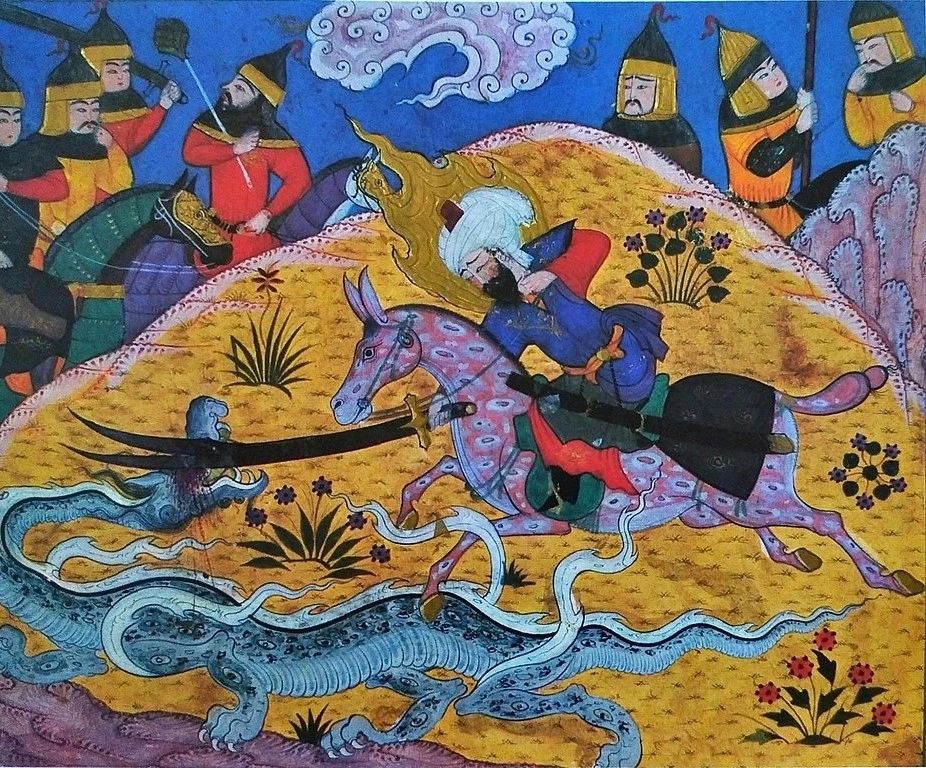
An artistic depiction of Caliph Ali ibn Abi Talib in battle, reflecting the style of medieval Islamic miniatures often used to illustrate key moments from early Islamic history.
The Course of the Battle of Nahrawan in Detail
On the morning of the battle, both sides faced each other across the plain near the Nahrawan Canal. The canal itself was an important irrigation feature from Sasanian times, providing water to the surrounding agricultural lands. Its location made Nahrawan strategically significant.
Ali addressed his troops, reminding them that the Kharijites had become oppressors who shed innocent blood. He emphasized that fighting them was necessary to restore peace and protect the Muslim community. At the same time, he warned against excess and ordered that no one should pursue those who fled or harm the wounded unnecessarily.
The Kharijites, on their part, performed prayers and recited Quran verses about fighting in the path of God. They charged with great fervor, shouting their slogan. Their initial assault caused some disorder in Ali's ranks, but the caliph's experienced commanders quickly regrouped.
Archers played a key role, raining arrows on the advancing rebels. Cavalry flanked them, and infantry closed in for close combat. The battle turned into a rout as the Kharijites' lines broke. Many died fighting; others were captured.
After the victory, Ali searched among the dead for a man with a specific physical sign—a deformed arm resembling a woman's breast—as per some traditions linked to prophetic warnings about future fitna (civil strife). Finding this confirmed the seriousness of the threat they had faced.
The Battle of Nahrawan ended with a clear military win for Ali, but it came at a high emotional cost. Many in his army felt sadness because they had fought against men who were once their comrades in faith and arms.
Aftermath and Immediate Consequences of the Battle of Nahrawan
Following the Battle of Nahrawan, Ali returned to Kufa. He delivered a sermon in the mosque, declaring that he had cut the roots of rebellion. He invited people to ask him questions about the future, showcasing his deep knowledge and foresight.
However, the victory was bittersweet. The Battle of Nahrawan weakened Ali's position in some ways. It diverted resources and attention from the larger conflict with Muawiya. More importantly, it created lasting resentment among some groups. The survivors of the Kharijites vowed revenge.
Two years later, in 661 CE, a Kharijite named Abd al-Rahman ibn Muljam assassinated Ali while he was praying in the mosque of Kufa. Ibn Muljam was one of the few who had escaped the Battle of Nahrawan. This martyrdom ended Ali's caliphate and paved the way for Muawiya to establish the Umayyad dynasty.
The Kharijite movement did not die with the Battle of Nahrawan. It continued as a decentralized ideology, sparking further uprisings against both Umayyad and Abbasid rulers. Different subgroups emerged with varying levels of extremism. While most Muslims rejected their takfiri approach, the Kharijites influenced later Islamic thought on issues of governance and justice.
Significance of the Battle of Nahrawan in Islamic History
The Battle of Nahrawan holds multiple layers of importance:
- Lesson on Unity: It showed how small ideological differences can escalate into major conflicts if not handled with wisdom. Ali's efforts at negotiation before fighting highlight the preference for peace in Islam.
- Warning Against Extremism: The Kharijites represent one of the earliest examples of extremist groups within Islam. Their willingness to declare other Muslims as kafirs (unbelievers) and justify violence set a dangerous pattern that has reappeared in history.
- Ali's Leadership Style: The Battle of Nahrawan demonstrated Ali's commitment to justice. He offered amnesty, minimized casualties where possible, and fought only when necessary to protect civilians. His mercy toward prisoners, even those who opposed him, remains a model.
- Impact on Sectarian Development: While the Battle of Nahrawan itself was not the direct cause of the Sunni-Shia divide (which has deeper roots), it deepened divisions and affected how later generations viewed authority and rebellion.
- Military and Strategic Insights: The low casualties on Ali's side despite fierce fighting point to superior tactics, discipline, and morale management.
In broader world history, the Battle of Nahrawan is part of the First Fitna—the first major civil war in Islam. This period shaped the transition from the Rashidun Caliphate to dynastic rule and influenced the political landscape of the Middle East for centuries.
The Geography and Location of the Battle of Nahrawan
The battle took place near the Nahrawan Canal, an ancient irrigation system east of the Tigris River. This canal was vital for agriculture in central Iraq. The area around Jisr al-Nahrawan (the bridge over Nahrawan) served as the main battlefield.
Today, the region is part of Iraq's landscape, with traces of the old canal still visible in some areas. The location's proximity to Baghdad (about 12 miles or 20 kilometers southeast) made it accessible yet strategically isolated enough for the rebels to gather.
The terrain—flat plains with access to water—favored large-scale troop movements but also allowed for effective use of cavalry and archery, which proved decisive in the Battle of Nahrawan.

Character of Ali ibn Abi Talib and His Approach in the Battle of Nahrawan
Ali ibn Abi Talib was renowned for his bravery, knowledge, piety, and justice. Known as the "Lion of God," he was a master warrior yet preferred peace. In the Battle of Nahrawan, he showed remarkable restraint.
He did not rush to fight. Multiple delegations were sent to reason with the rebels. When battle became unavoidable, he gave clear orders to avoid unnecessary bloodshed. After the victory, he ensured the wounded received care.
Ali's famous saying after the battle—that he had uprooted the fitna—reflects his view that the action was necessary for the greater good of the Muslim ummah (community). His sermons in Nahj al-Balagha provide deep insights into his thoughts on governance, rebellion, and faith.
The Kharijites: Ideology, Beliefs, and Legacy
The Kharijites believed in absolute equality among believers and strict adherence to the Quran and Sunnah as they interpreted it. They opposed hereditary rule and believed a leader could be removed if he deviated from justice—even by force.
While their emphasis on piety and anti-corruption had some appeal, their extreme methods—takfir and violence against fellow Muslims—led to their rejection by the mainstream. Over time, moderate offshoots like the Ibadi school emerged, which exist today mainly in Oman and parts of North Africa. They differ from the violent early Kharijites.
The Battle of Nahrawan became a symbol for later Kharijite groups, who saw the fallen as martyrs. This narrative fueled further revolts throughout Islamic history.
Lessons from the Battle of Nahrawan for Today
The events of the Battle of Nahrawan offer timeless lessons:
- Dialogue First: Exhaust peaceful means before conflict. Ali's multiple attempts at reconciliation show the value of patience.
- Avoid Extremism: Rigid interpretations that lead to declaring others as enemies can destroy communities from within.
- Justice and Mercy: True leadership balances firmness with compassion, as Ali did by offering amnesty.
- Unity Matters: Internal divisions weaken the ummah against external challenges. The Battle of Nahrawan delayed Ali's efforts against Muawiya.
- Historical Awareness: Understanding past fitnas helps prevent repeating mistakes in modern conflicts.
In an era of polarization and ideological extremism, the story of the Battle of Nahrawan reminds us of the human cost of division and the importance of seeking common ground based on shared faith and values.
Broader Context: The First Fitna and Its Long-Term Effects
The First Fitna, which included battles like Jamal, Siffin, and Nahrawan, marked the end of the era of the "Rightly Guided" Caliphs. It led to the rise of the Umayyads and eventually the Abbasids. The Battle of Nahrawan was a key internal front in this larger struggle.
It also influenced how later Muslim thinkers discussed rebellion, legitimate authority, and the limits of dissent. Scholars across Sunni, Shia, and other traditions have analyzed it differently, but all recognize its tragic nature as a war between Muslims.
Cultural and Literary References to the Battle of Nahrawan
The Battle of Nahrawan appears in classical Islamic histories by authors like al-Tabari, al-Baladhuri, and others. It features in sermons of Ali preserved in Nahj al-Balagha. Poets and storytellers have recounted the bravery, mercy, and sorrow associated with the event.
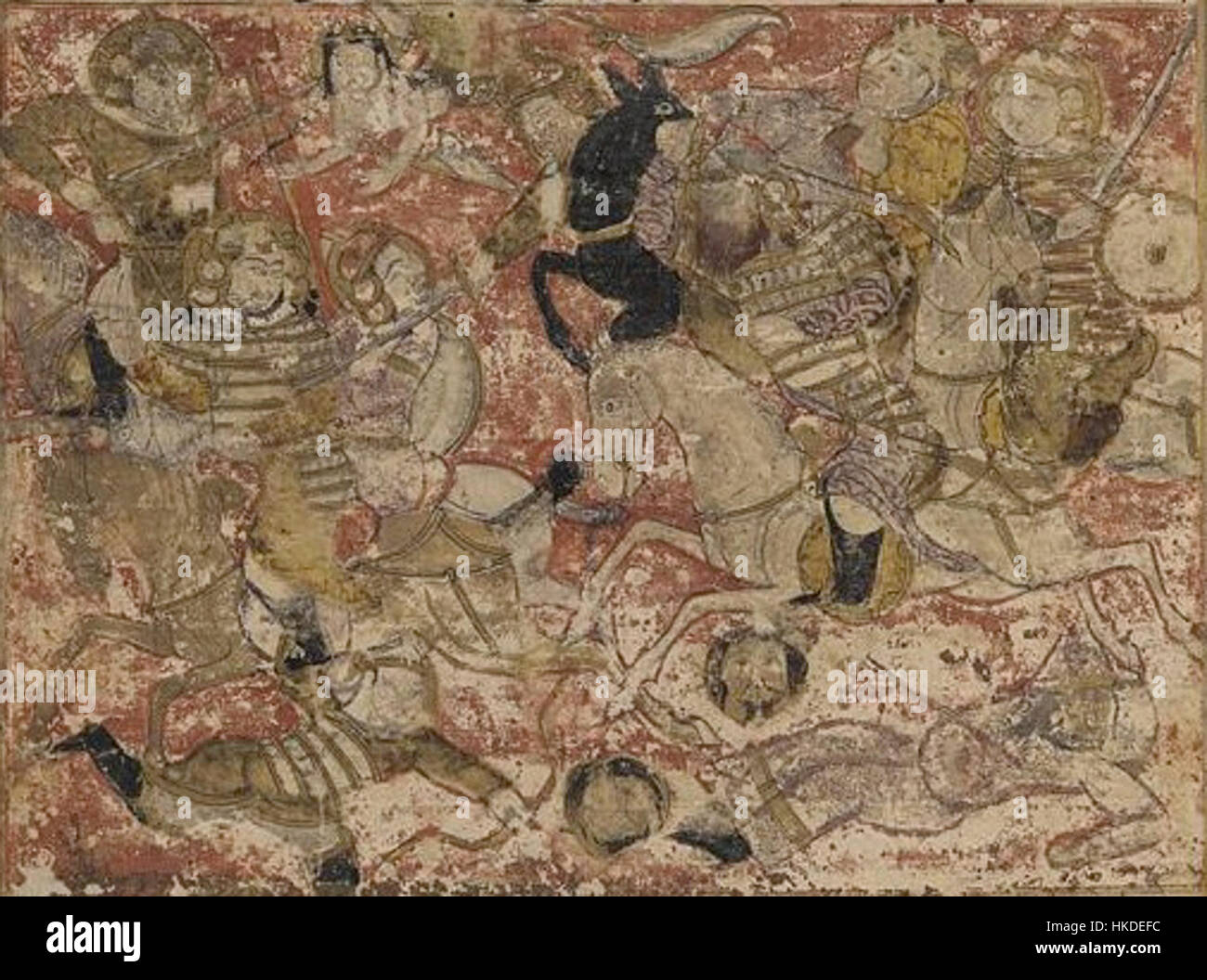
In art, Ottoman miniatures from the 16th-17th centuries depict dramatic scenes of the battle, showing Ali leading his troops with his famous sword Zulfiqar. These illustrations capture the epic quality of early Islamic conflicts.
Modern discussions on extremism often reference the Kharijites as a historical precedent, drawing parallels (with caution) to contemporary groups.
Family and Human Stories from the Battle of Nahrawan
Beyond strategy and ideology, the Battle of Nahrawan involved real people and families. Many Kharijites left wives and children behind in Kufa. Some fighters had previously stood side by side with Ali's soldiers in Siffin.
The story of Shimr and Imam Husayn illustrates how acts of kindness in one moment can contrast sharply with later tragedies. Such anecdotes humanize history and remind us that behind every battle are individuals with hopes, fears, and regrets.
Ali's own family suffered indirectly. The diversion caused by the Battle of Nahrawan contributed to the chain of events leading to his assassination, which deeply affected his sons Hasan and Husayn and the broader Ahl al-Bayt.
Strategic Analysis of the Battle of Nahrawan
Militarily, the Battle of Nahrawan was a textbook example of superior numbers and coordination overcoming fanatical but disorganized resistance. Ali's use of combined arms—cavalry, archers, and infantry—neutralized the Kharijites' aggressive charges.
The amnesty offer was both merciful and tactically smart, reducing the enemy's numbers without fighting. This psychological approach prevented a longer, more costly siege or guerrilla campaign.
The low casualties on the winning side suggest excellent leadership and discipline, preventing the kind of chaos that often follows victory in civil wars.
Theological Debates Surrounding the Battle of Nahrawan
Scholars have debated whether the Kharijites were true believers who erred or whether their actions placed them outside the fold of Islam. Mainstream views condemn their violence and takfir while acknowledging that many started with sincere intentions.
Ali himself did not declare all Kharijites as apostates wholesale; he targeted those engaged in murder and rebellion. This nuanced approach contrasts with the Kharijites' blanket judgments.
The Battle of Nahrawan also raised questions about when it is permissible to fight fellow Muslims—issues still discussed in Islamic jurisprudence (fiqh) today.
The Nahrawan Canal: Its Historical and Modern Relevance
The Nahrawan Canal was an engineering marvel of the Sasanian Empire, later maintained under Islamic rule. It supported fertile farmlands that fed populations in central Iraq.
During the Battle of Nahrawan, the canal provided water and a natural landmark. Today, remnants of ancient canals in Iraq remind visitors of the region's rich agricultural and historical heritage. Climate change, conflicts, and modernization have affected these waterways, but their legacy endures.
Reflections on Leadership from the Battle of Nahrawan
Ali's leadership during the Battle of Nahrawan exemplifies key qualities: wisdom in seeking peace, courage when forced to fight, mercy in victory, and foresight about long-term consequences. His ability to inspire loyalty even in difficult times remains inspirational.
In contrast, the Kharijite leaders' refusal to compromise shows the dangers of ideological purity without flexibility or broader consultation.
Why the Battle of Nahrawan Still Matters in the 21st Century
In our interconnected yet divided world, the themes of the Battle of Nahrawan resonate strongly. Issues of religious extremism, political polarization, civil conflicts within communities, and the search for just governance appear in many regions.
Studying the Battle of Nahrawan encourages critical thinking: How do we handle dissent without violence? How can we maintain unity while allowing legitimate differences of opinion? What safeguards prevent sincere faith from turning into harmful fanaticism?
Educational programs, interfaith dialogues, and peace initiatives often draw on such historical examples to promote tolerance and understanding.
Conclusion: Remembering the Battle of Nahrawan with Wisdom
The Battle of Nahrawan was a sorrowful chapter where Muslims fought Muslims, born from the ashes of Siffin. It ended in military victory for Caliph Ali but left deep scars. It taught the ummah about the fragility of unity and the heavy price of division.
By studying this event with an open heart and seeking truth, we honor the memory of those involved and draw guidance for building more peaceful communities today. The Battle of Nahrawan reminds us that true strength lies not just in winning battles but in preserving justice, mercy, and brotherhood.
May history serve as a mirror for reflection and a guide toward greater harmony.
Disclaimer: This article is written for educational and informational purposes based on historical sources. It aims to present facts in a neutral and accessible manner. Different Islamic traditions may interpret events like the Battle of Nahrawan with varying emphases. Readers are encouraged to consult primary sources and qualified scholars for deeper religious understanding. The content does not intend to promote sectarian division or any form of extremism.
FAQs about the Battle of Nahrawan
1. When and where did the Battle of Nahrawan take place? The Battle of Nahrawan occurred on 17 July 658 CE (9 Safar 38 AH) near the Nahrawan Canal in Iraq, east of the Tigris River and close to modern Baghdad.
2. Who fought in the Battle of Nahrawan? Caliph Ali ibn Abi Talib's Rashidun Caliphate forces (about 14,000) fought against the Kharijite rebels (around 2,800 who remained after amnesty offers).
3. What caused the Battle of Nahrawan? It stemmed from the Kharijites' opposition to the arbitration after the Battle of Siffin. They viewed it as against divine judgment and later turned to violence against civilians.
4. How many people died in the Battle of Nahrawan? Approximately 2,400 Kharijites were killed, with Ali's side suffering only 7-13 casualties. About 1,200 rebels accepted amnesty beforehand.
5. What was the outcome of the Battle of Nahrawan? Ali achieved a decisive victory, but the event weakened his position long-term and contributed to his assassination by a Kharijite survivor two years later.
6. Who were the Kharijites? A group that seceded from Ali's army, known for their strict slogan "No judgment but God's" and extreme views that led to rebellion and takfir.
7. Did Ali try to avoid fighting in the Battle of Nahrawan? Yes, he sent envoys for dialogue and offered generous amnesty terms before the battle.
8. Is the Battle of Nahrawan related to Sunni-Shia differences? It occurred during the First Fitna and contributed to divisions, but the core Sunni-Shia split has roots in earlier succession issues. The battle is viewed differently across traditions.
9. What lessons does the Battle of Nahrawan teach? It highlights the importance of unity, the dangers of extremism, the value of mercy, and the preference for peaceful resolution in conflicts.
10. Where can I learn more about the Battle of Nahrawan? Consult classical histories like those of al-Tabari, Nahj al-Balagha, and reputable modern academic sources on early Islamic history.
References
- Wikipedia: Battle of Nahrawan (summarizing primary accounts and scholarly consensus).
- Britannica: Entry on Battle of Nahrawan and Kharijites.
- Al-Tabari's History of the Prophets and Kings (classical source).
- Nahj al-Balagha (sermons and letters of Ali ibn Abi Talib).
- Various Shia and Sunni historical narratives, including accounts from al-Baladhuri and others.
- Modern analyses from academic works on the First Fitna and early Islamic civil wars.
All information is drawn from established historical records. Interpretations may vary slightly across sources, but core events remain consistent. For in-depth study, refer to verified translations and peer-reviewed research.
